Maple Falls had been dying for years.
Young people left for the cities. Shops closed. The school consolidated with two towns over. By the time Laura moved back to care for her aging mother, Main Street had more empty storefronts than open ones.
“This town is finished,” her mother said. “Nothing left to save.”
But Laura wasn’t so sure.
The Harvest Festival had happened every October for a hundred years.
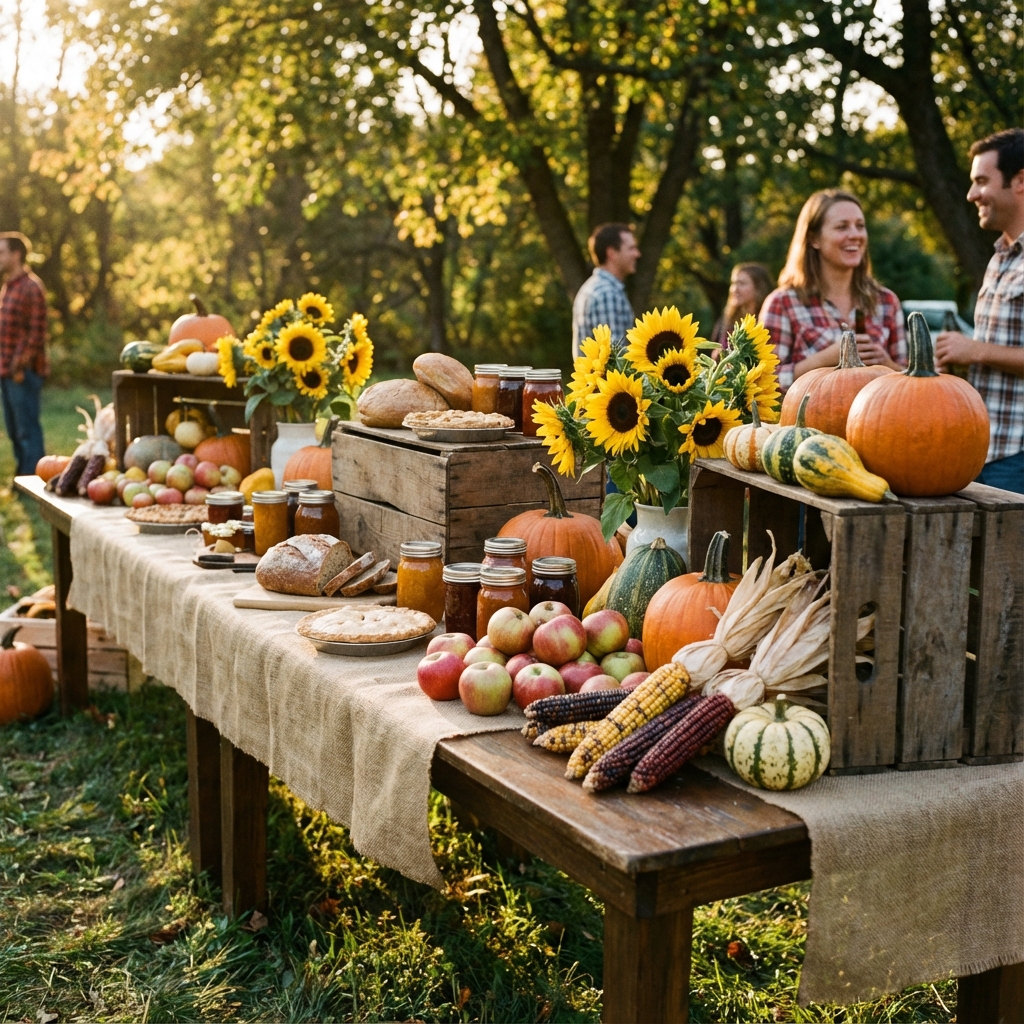
Cider and pumpkins, a parade down Main Street, the crowning of the Apple Queen. Laura remembered it from childhood: the smell of kettle corn, the sound of the brass band, the way the whole town gathered like one enormous family.
It hadn’t happened in five years. Not enough volunteers, not enough money, not enough hope.
“We should bring it back,” Laura told the town council.
“With what resources?” asked Mayor Chen, who was also the pharmacist and the crossing guard.
“With whatever we have.”
*
She started small.
Flyers on the remaining open storefronts. A post in the town Facebook group. Phone calls to everyone she remembered from growing up.
The response surprised her.
“My grandmother was Apple Queen in 1962,” said Maria from the hardware store. “I still have her sash. I could donate it for the parade.”
“I’ve got apples,” offered Old Man Jenkins, who’d held onto his orchard when everyone else sold. “More than I can sell. Take what you need.”
“I can’t march anymore,” said Mrs. Peterson, who’d led the brass band for decades. “But I can teach the kids who can.”
*
The day of the festival, Laura woke before dawn.
She expected disaster — forgotten supplies, empty streets, rain. Instead, she found half the town already setting up.
Tents appeared on the green. Someone had strung lights between the lampposts. The high school band was warming up, their brass catching the early light.
And people — people everywhere, people she hadn’t seen in years, people who’d driven hours to come back for one autumn day.
“This is remarkable,” Mayor King said, standing beside her.
“This is what happens when you ask,” Laura replied. “People want to belong. You just have to give them something to belong to.”
*
The parade was chaos.
Kids on tricycles decorated with crepe paper. A tractor pulling a wagon of hay bales. The elderly brass band members marching alongside the young ones, teaching rhythms and histories in real time.
The crowning of the Apple Queen was presided over by the last one, Mrs. Elliot, now eighty-seven, still wearing the sash Maria had found.
And everywhere, the smell of cider and kettle corn, exactly as Laura remembered.
“Mom,” she said, pushing her mother’s wheelchair through the crowd. “What do you think?”
Her mother — stubborn, pessimistic, convinced the town was doomed — was crying.
“I think maybe I was wrong,” she said. “I think maybe there’s something left.”
*
The Harvest Festival came back every year after that.
Laura organized it at first, then trained others. The town council started a committee. Volunteers multiplied.
Maple Falls didn’t stop dying — the demographics were still against it, the economics still hard. But something had shifted. There was pride now. Purpose.
“What made the difference?” someone asked Laura, years later.
She thought about it. The flyers, the phone calls, the apple orchard. But none of that was the real answer.
“I asked,” she said finally. “I asked people if they wanted to save their town. And it turned out, they’d just been waiting for someone to ask.”
Harvest Festival – Flash Fiction – October 19, 2026