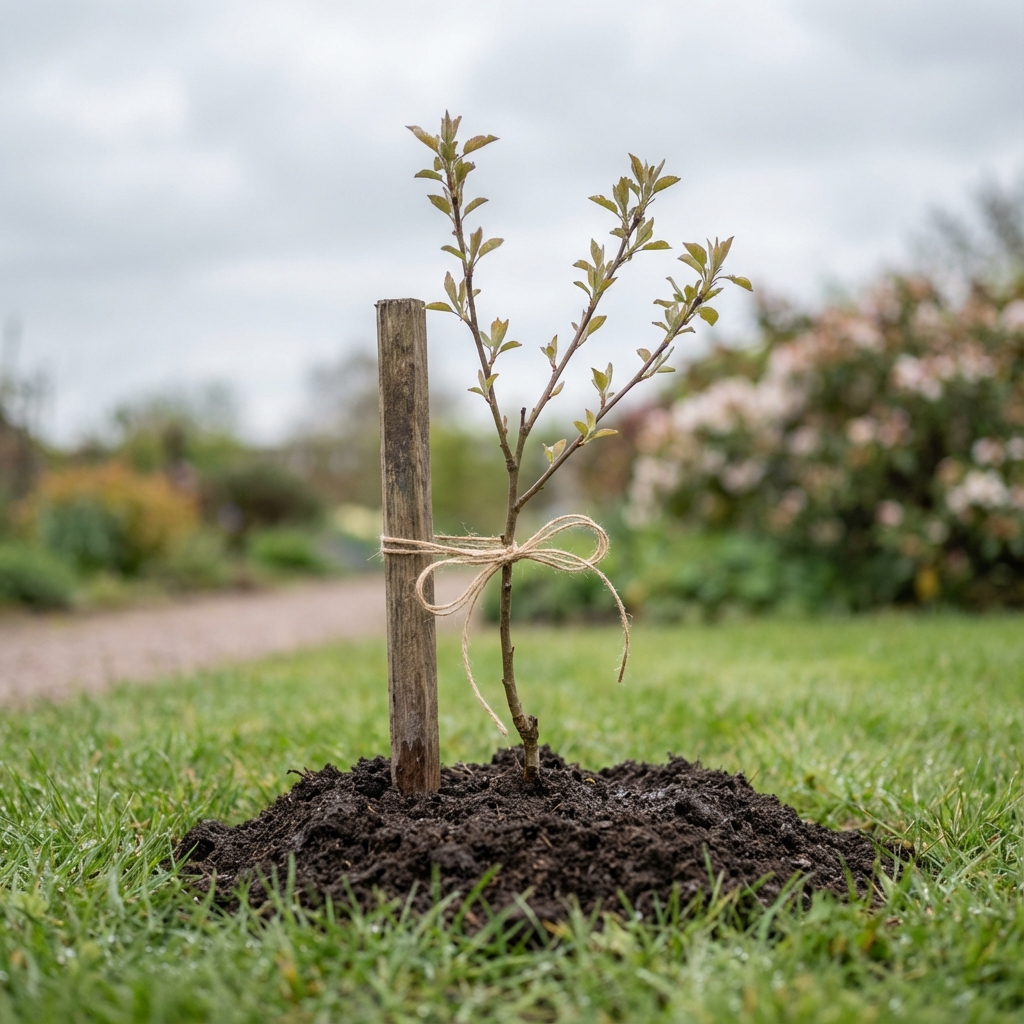
The oak tree in the corner of the yard was ninety-three years old, the same age as Gran.
“Planted the day I was born,” she’d say, whenever anyone asked. “My father dug the hole before he even held me. Said a child and a tree should grow up together.”
It wasn’t the only tree. The whole backyard was a forest of family history, each tree marking a life: Gran’s oak, Mom’s maple, Uncle Richard’s birch (he’d always been the odd one), the weeping willow for Aunt Celia who had died young and was remembered in the way its branches swept the grass like gentle fingers.
And now, thought Maya, running her hand over the bark of her own apple tree, planted twenty-nine years ago when she came screaming into the world, it was her turn to continue the tradition.
“You’re sure you want to do this today?” her mother asked, standing at the kitchen window. “The forecast says rain.”
Maya touched her stomach, still flat, still hiding the secret she’d only just shared with the family. Eight weeks along. A flutter of cells that would someday be a person, who would someday have a tree.
“Gran wants to be there,” Maya said. “And you know what the doctors said.”
Neither of them spoke the rest of that sentence aloud: that Gran probably wouldn’t see another spring. That this might be the last tree she’d help plant. That time, as it always did, was running out.
–
They gathered in the backyard at noon: Maya and her husband James, her parents, the aunts and uncles who could make it, a cousin who’d driven three hours because “I wasn’t going to miss this.”
And Gran, in her wheelchair, bundled in blankets despite the mild weather, her eyes bright and her voice steady.
“What do we have?” Gran asked, as James carried in the sapling.
“Cherry,” Maya said. “A Yoshino cherry. It should bloom in spring.”
Gran nodded approvingly. “Good choice. Cherry blossoms symbolize new beginnings. And they’re beautiful when they fall, like pink snow.”
James set the sapling down beside the hole Maya’s father had dug that morning, in a spot between Gran’s oak and Maya’s apple tree. Three generations in a row, with room left for more.
“Who speaks first?” asked James, new to this tradition and slightly overwhelmed.
“The planter,” Maya’s father said. “Then anyone who wants to add a blessing.”
Maya took a breath. She’d been thinking about what to say for days, but now that the moment was here, all her prepared words scattered like leaves.
“I don’t know you yet,” she began, speaking to the sapling, or maybe to the life inside her, or maybe to both. “I don’t know who you’ll become. But I know I already love you, and I know this tree will watch you grow. When you’re a kid, you’ll climb it. When you’re a teenager, you’ll probably ignore it. And when you’re my age, you’ll stand where I’m standing and understand why this matters.”
She turned to Gran, whose eyes were glistening. “And I hope you’ll know that your great-great-grandmother held this sapling, even if you never get to meet her. That you come from a long line of people who believed in planting things they’d never see fully grown.”
Gran reached out a trembling hand, and Maya placed the sapling’s small trunk in her palm.
“Hello, little one,” Gran whispered. “I’ve seen ninety-three springs, and you’ll see many more. Be strong. Be patient. Grow toward the light.”
One by one, the family added their blessings. Maya’s mother wished the tree deep roots. Her father wished it resilience against storms. Uncle Richard, still odd, still beloved, wished it “the good sense to grow at a reasonable pace, not like that monster oak.”
Everyone laughed. Even Gran.
–
They lowered the sapling into the hole together, a dozen hands on the narrow trunk. Maya’s father filled in the dirt while James patted it down. Maya’s mother had brought a watering can, ceremonial and old, that had been used for every tree planting in family memory.
“Your turn,” Maya’s mother said, handing it to her.
Maya poured the water slowly, watching it sink into the fresh earth. Such a small thing, really, a stick with roots, a hole in the ground, some water. And yet it was everything. A promise. A connection. A way of saying: we were here, and we loved, and something of us will remain.
“Take a photo,” Gran commanded. “I want a photo with the tree.”
They wheeled her close, and Maya crouched beside her, one hand on Gran’s shoulder, one hand on the thin trunk of the cherry sapling. Three generations touching, connected by soil and sap and the stubborn human need to leave something behind.
After the photo, Gran squeezed Maya’s hand. “I won’t see it bloom,” she said quietly.
“Gran…”
“Hush. I’m ninety-three, not naive. But that’s all right.” She looked at the sapling, then at the oak towering nearby. “I’ve seen my tree grow tall and strong. I’ve seen your mother’s tree and yours and all the others. That’s enough. That’s more than enough.”
Maya felt tears sliding down her cheeks, but she didn’t wipe them away. “I wish you could meet her. Him or her. Whoever they turn out to be.”
“I will,” Gran said firmly. “Every spring, when the cherry blossoms fall like pink snow, I’ll be there. Just look up. You’ll see.”
–
Gran passed three months later, peaceful as a November sunset.
The following April, Maya stood beneath the cherry tree, bigger now, though still small, and watched the first blossoms open. Pink and delicate and heartbreakingly temporary, just as Gran had promised.
Her belly was round now, unmistakable. Inside, the baby kicked, strong and impatient, probably another stubborn soul in a family full of them.
“Look,” Maya whispered, tilting her face up to the falling petals. “Your great-great-grandmother was right. Pink snow.”
A blossom drifted down and landed on her stomach, soft as a blessing.
Maya smiled through her tears, placed her hand over the spot, and felt the baby kick again, a greeting, maybe, to the grandmother she’d never meet and the tree that would watch her grow.
The tradition would continue. The forest would expand. And somewhere in the fall of petals and the reach of roots, the family would remain connected, past and future intertwined like branches.
