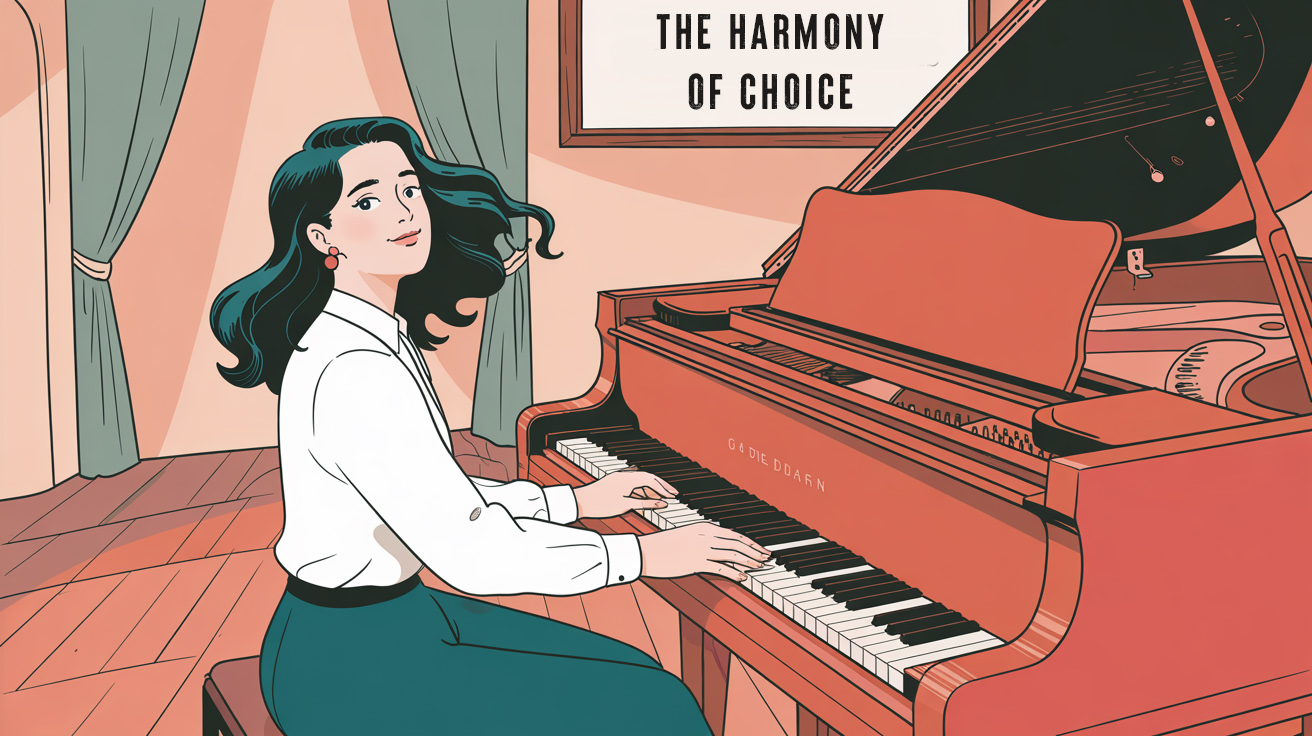
Six months after her unexpected Boston performance, Aria sat on a park bench, watching children chase each other across the grass. Central Park hummed with Saturday afternoon energy—joggers, families, and musicians creating a symphony of urban life. Her fingers tapped an unconscious rhythm on her thigh, a habit she'd never been able to break.
“Earth to Aria,” Zoe laughed, nudging her friend's shoulder. “You zoned out again. Thinking about tonight?”
Aria smiled, tucking a strand of hair behind her ear. “Sorry. Yeah, a little nervous.”
“You've performed at Carnegie Hall, but you're nervous about a high school talent show?” Zoe raised an eyebrow.
“It's different this time,” Aria replied, watching a street performer several yards away coax a delicate melody from his violin. “This isn't about being perfect. It's about being… me.”
The Boston concert had changed everything. Aria had played beautifully that night—not with technical perfection, but with raw emotion that had brought the audience to their feet. The reviews had called it her most moving performance yet. Her parents, particularly her mother, had been ecstatic.
But backstage, with the applause still ringing in her ears, Aria had made the hardest decision of her life.
“I need a break,” she had told her stunned parents. “Not forever. Just… I need to be sixteen for a while.”
The argument that followed had been spectacular—tears, accusations, reminders of sacrifices made. But for the first time, Aria had stood her ground.
“Mom, Dad,” she'd finally said, her voice steadier than she felt. “I love playing. I do. But I don't love what it's become. And if I keep going like this, I'm afraid I'll end up hating the piano altogether.”
It had taken weeks of tense conversations, a family therapist, and finally an intervention from her grandmother—herself a former dancer who had burned out before thirty—before her parents began to understand.
The compromise they reached wasn't perfect: Aria would transfer from home-schooling to an actual high school, limit performances to once a month rather than weekly, and have weekends free from mandatory practice. In return, she would maintain her daily practice routine on weekdays and continue with her long-term career plans, just at a more sustainable pace.
“Have you told your parents about the song yet?” Zoe asked, interrupting Aria's thoughts again.
Aria shook her head. “I want it to be a surprise.”
For tonight's talent show, Aria wasn't playing classical piano. Instead, she would debut an original composition—a piece that blended elements of classical with the pop and indie music she'd discovered in recent months. And she would sing, something her mother had always discouraged as a distraction from her “real” talent.
“They're going to flip,” Zoe grinned. “In a good way, I hope.”
“We'll see,” Aria replied, but she smiled. The relationship with her parents was healing, slowly. Her mother had even joined a support group for parents of gifted children, where she was learning to separate her own ambitions from her daughter's happiness.
Later that evening, backstage at her school's auditorium, Aria peeked through the curtains. The space was nothing like the grand concert halls she was used to—just a simple stage with decent acoustics and seats filled with students, teachers, and parents. Yet her heart pounded harder than it had before any classical performance.
Her parents sat in the third row, her father checking his watch while her mother scanned the program. They expected Chopin—the piece she'd listed in the program.
“You're on after Tyler's juggling act,” the student stage manager informed her, clipboard in hand.
Aria nodded, adjusting the microphone stand next to the upright piano. Not a Steinway grand, just a well-loved school piano with slightly uneven action. Perfect for what she needed tonight.
When her name was called, the applause was enthusiastic but informal—nothing like the reverent hush of a classical audience. As she took her seat at the piano, she caught her mother's encouraging smile and her father's subtle thumbs-up.
“Hi everyone,” she said into the microphone, her voice only slightly shaky. “There's been a small change to the program. Instead of Chopin, I'd like to play something I wrote myself. It's called ‘The Weight and the Wait.'”
She saw her mother's posture stiffen, her father's brow furrow in confusion. But before they could process the change, Aria began to play.
The piece opened with a delicate, classical motif—notes that spoke of constraint and precision. But gradually, the melody transformed, incorporating rhythms and harmonies that would make her classical teachers wince. And then, Aria began to sing.
Her voice wasn't professionally trained, but it was clear and sincere as she sang about expectations and dreams, cages and flight. The lyrics spoke of finding balance between gifts and passions, between others' visions and her own.
As the final notes faded, there was a moment of silence. Aria kept her eyes on the keys, suddenly afraid to look up. Then the room erupted—whistles, cheers, and thunderous applause from her peers.
Slowly, she raised her gaze to find her parents. Her father was on his feet, clapping with uncharacteristic enthusiasm. And her mother—strict, perfectionistic, ambitious mother—had tears streaming down her face, her hands pressed together as if in prayer.
Afterward, backstage, her parents found her among the crowd of performers congratulating each other.
“Aria,” her mother began, her voice unsteady. “That was…”
“I know it wasn't perfect,” Aria said quickly. “The bridge section still needs work, and my vocal control on the higher notes—”
Her mother shook her head, cutting her off. “It wasn't perfect. It was authentic. And that's…” she paused, searching for words. “That's what I've been missing in your playing. That's what I couldn't teach you.”
Her father wrapped an arm around both of them. “We're proud of you, kiddo. Not because you're the best pianist in your age group, but because you're finding your voice—literally, it seems.”
Aria felt something tight in her chest finally unravel. “I still love classical,” she assured them. “I'm not giving it up. I'm just… expanding.”
Later that night, after celebratory ice cream with Zoe and a few new friends from school, Aria sat at the grand piano in her living room. Her fingers moved over the familiar keys, playing a few notes from her composition.
On the piano rack sat a letter she'd received last week—an invitation to a prestigious summer program that would combine classical training with contemporary composition. Six months ago, she would have declined, afraid of diluting her classical focus. Now, it represented exactly the path she wanted to explore.
Beside it was a framed review of her Boston performance, with one line highlighted: “Aria played not just with technical brilliance, but with the emotional wisdom of someone twice her age.”
What the critic couldn't have known was that the performance marked both an ending and a beginning—the night Aria stopped playing the life others had composed for her and began writing her own score.
As moonlight spilled through the floor-to-ceiling windows, Aria played softly, a new melody taking shape under her fingers. Outside, the New York skyline glittered, no longer a cage but a canvas of possibilities. And for once, the keys beneath her hands felt not like a weight, but like wings.
