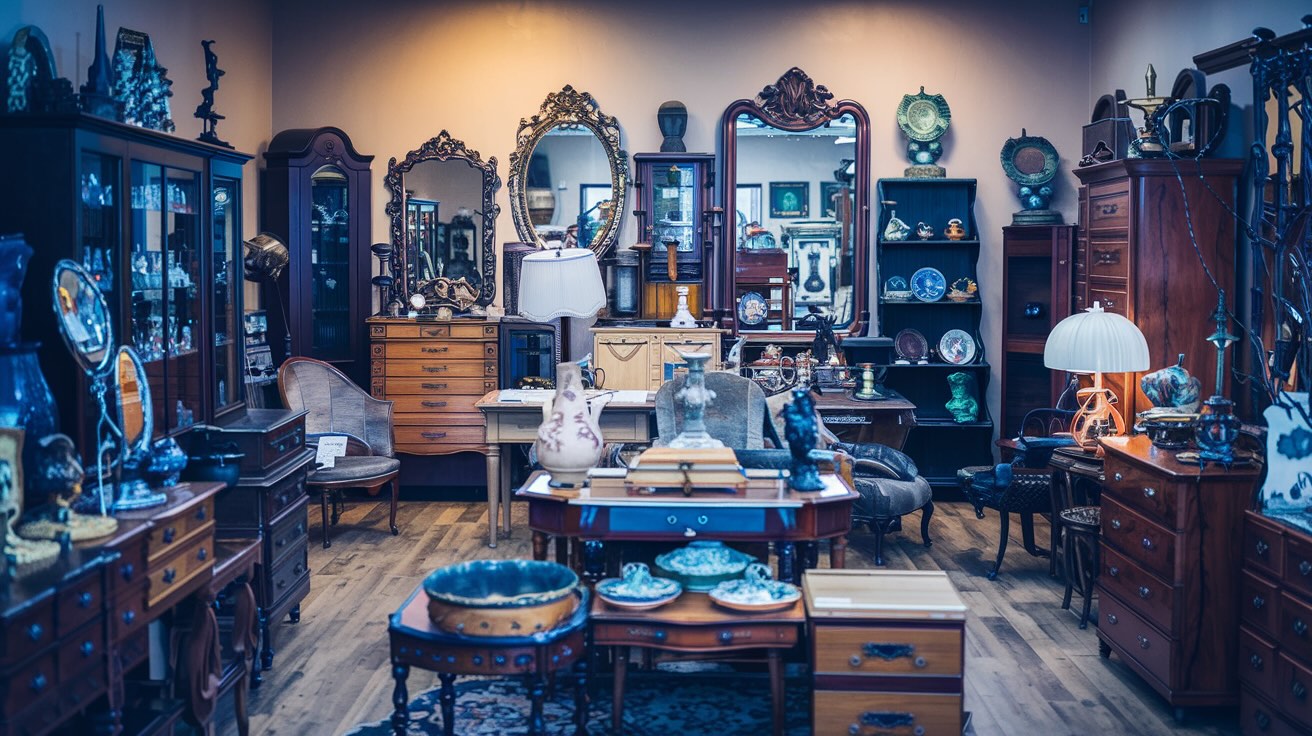
The ceramic cat with human teeth started it all.
Jasmine found it lurking on a back shelf at Treasures & Trinkets Antique Store, its disturbing grin making her laugh so hard she nearly knocked over a display of vintage doilies.
“Oh my god, Marie, come look at this nightmare,” she called to her best friend.
Marie rounded the corner, took one look at the cat, and immediately pulled out her phone. “That's it. That wins. Nothing can be uglier than, wait, is that a fur-covered teapot?”
And so, the Ugly Antique Appreciation Society was born.
It started as a joke between five friends looking for something to do on rainy Saturdays. The rules were simple: Find the most spectacularly ugly antique. Present your case. Winner gets bragging rights and the others chip in to buy their monstrosity.
“I present… a lamp made entirely of deer hooves!” Connor announced during their third meeting, hefting his find onto the store's coffee table they'd commandeered as their courtroom.
“Disturbing, but not ugly enough,” Rachel countered, revealing a painting of what appeared to be angry Victorian children with the proportions of adult bodybuilders. “Behold, ‘The Cherubs of Doom!'”
Mr. Peterson, the store's owner, initially watched their gatherings with bewilderment. “You're buying my worst pieces,” he said, scratching his head. “On purpose?”
“One person's trash is another person's hilarious conversation starter,” Shawn explained, clutching a clock embedded in a taxidermied fish.
Within a month, their Saturday meetings had become an event. They created official scorecards. They developed categories: “Most Likely to Curse Your Bloodline,” “Craft Project Gone Wrong,” and the coveted “What Were They Thinking?” award.
The ceramic cat with human teeth—dubbed “Gerald” by group consensus—became their mascot. They created an Instagram account: @UglyAntiqueAppreciation. Their first post of Gerald got 10,000 likes and comments ranging from “Thanks, I hate it” to “WHERE CAN I BUY THIS?”
“We've gone viral,” Jasmine announced, staring at her phone. “People are asking if they can join us.”
The next Saturday, fifteen people showed up. The Saturday after that, thirty.
Mr. Peterson was ecstatic. “I've sold more inventory in the past month than in the entire last year! And it's all the stuff I couldn't pay people to take!”
The Appreciation Society had to establish ground rules as their numbers grew:
Ugly is subjective, no shaming someone's genuine taste
Creepy dolls are limited to one per meeting (they were overwhelming other categories)
Items must be purchased, not just mocked
New members must pass the initiation: sit with Gerald for a full minute without looking away
The meetings became legendary. Connor started a spreadsheet tracking “ugliness metrics.” Rachel began interviewing creators when they could track them down, including a memorable Zoom call with the 92-year-old woman who'd made the fur teapot
“It was the '70s, dear. We were all doing questionable things with craft supplies.”
Local news picked up the story. “These millennials are saving antique stores with their weird sense of humor,” the headline read, featuring a photo of the group posing with their finds like proud parents.
But the real magic happened in the community that formed. The woman who bought a hilariously bad paint-by-number of Elvis-as-a-cat? She was new in town and made her first friends at the meeting. The teenager who found a majorly unsettling doll collection? He was dealing with social anxiety and found comfort in a group that celebrated the weird.
“I love that we've made it okay to like things ‘wrong,'” Marie said one afternoon, arranging a display of particularly unfortunate vases. “Like, who says we have to appreciate antiques seriously?”
Mr. Peterson, who'd started curating an “Ugly Corner” with special finds, overheard. “You know what you've really done? You've given these pieces stories again. That cat wasn't just ugly, now it's Gerald, who started a movement. That teapot isn't just bizarre, it's a symbol of 1970s crafting freedom.”
The Society's six-month anniversary approached, and they planned their biggest event yet: The Ugly Antique Gala. Formal dress required, ugly antiques as accessories encouraged.
The night of the gala, Treasures & Trinkets was transformed. Fairy lights illuminated displays of magnificent monstrosities. The fur teapot held punch. The deer hoof lamp provided mood lighting. Gerald presided over everything from a throne made of stacked, unsettling garden gnomes.
“A toast!” Jasmine called out, raising a glass served in a cup shaped inexplicably like a boot. “To finding joy in the rejected, beauty in the bizarre, and friends in the weirdest places!”
“To the ugly!” the crowd cheered.
As the party continued, Mr. Peterson pulled the original five aside. “I have something to show you.” He led them to the back room and unveiled a painting so spectacularly awful it rendered them speechless. It appeared to be a self-portrait of someone who'd never seen a human face, painted on velvet, with googly eyes glued on.
“My grandmother painted this,” he said solemnly. “It's been in my family for generations. We've hidden it, been embarrassed by it. But you've taught me something, the ‘ugly' pieces have the best stories. The weird stuff brings the most joy. So I want to donate this as the Society's permanent trophy. Pass it between winners. Let it be loved for exactly what it is.”
Marie accepted the painting reverently. “It's perfectly horrible. We'll cherish it forever.”
Later that night, as they cleaned up, Jasmine found Connor arranging a new display in the Ugly Corner. A sign read: “Appreciated By The Society, These Pieces Have Found Their People.”
“You know what's funny?” Connor said. “We started this as a joke, but now when I look at Gerald or the fur teapot, I don't even see them as ugly anymore. I see Saturday laughs and new friends and Mr. Peterson's smile when we buy his ‘problem pieces.'”
“Maybe that's the point,” Jasmine said. “Nothing's really ugly when it's loved.”
The next morning, Mr. Peterson arrived to find a package on his doorstep. Inside was a ceramic piece, a companion to Gerald, equally disturbing but somehow perfect. The note read: “Made this in ceramics class. Inspired by your Society to embrace the weird. Thank you for making space for those of us who see beauty differently. A fan”
He placed it next to Gerald in the window display. Within minutes, someone was photographing it, probably planning their argument for next Saturday's meeting.
The Ugly Antique Appreciation Society continued to grow, spawning chapters in other cities, all celebrating the magnificently awful. Art schools started studying their Instagram to understand viral aesthetics. Antique stores reported increased sales of previously unmovable items.
But in Treasures & Trinkets, it remained what it started as, friends gathering to laugh at weird stuff, finding community in the rejected corners of the antique world. Every ugly lamp and cursed doll and questionable craft project got its moment of appreciation, its chance to be the star.
And Gerald? Gerald presided over it all with his human teeth smile, a reminder that sometimes the best things in life are the ones that make us laugh, bring us together, and teach us that beauty is weird, subjective, and absolutely everywhere if you're willing to look at it sideways.
The Society's motto, printed on t-shirts featuring Gerald's unsettling grin, said it all: “Ugly is just pre-loved by brave people.”
